When Great Music Lies to You: How Anime Soundtracks Cover Up Stories That Are Falling Apart
There's a moment most dedicated anime fans know well. You finish an episode, the ending theme kicks in, and you're sitting there feeling genuinely moved — maybe even a little emotional. Then a week passes, and you try to explain to a friend what actually happened in the plot, and the words just... don't come out right. The story doesn't hold up in the retelling. But man, that soundtrack?
That soundtrack was immaculate.
This is the anime soundtrack trap, and it's more common — and more insidious — than most of us want to admit.
The Emotional Shortcut Nobody Talks About
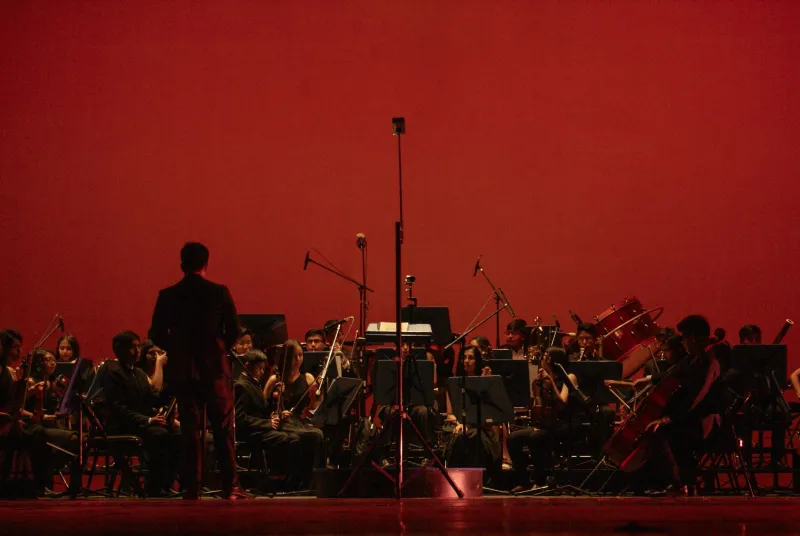
Music in storytelling has always carried emotional weight. That's not a controversial take. Hollywood figured it out decades ago — slap a John Williams score under anything and suddenly people are crying in a movie theater over a CGI alien. Anime composers have arguably pushed this craft even further, building soundscapes that feel deeply personal, culturally layered, and technically stunning.
But here's the thing about emotional shortcuts: they work too well.
When a sweeping orchestral piece drops at the exact moment a character makes a dramatic decision, your brain registers significance before your critical mind has a chance to ask, "Wait — does this decision actually make sense given everything we've seen?" The music tells you this matters. So you feel like it matters. And by the time the episode ends, you've already accepted the moment as earned, even if the writing didn't do the work to get you there.
That's not elevating the story. That's replacing it.
Case Study: The Shows That Got Away With It (For a While)
Without naming names in a way that turns this into a callout post, think about any mid-tier fantasy or action anime from the past five years that had a genuinely celebrated OST. There's probably a few coming to mind right now. Shows that generated intense discussion on Reddit, spawned fan edits on YouTube set to their best tracks, and held strong Crunchyroll ratings through their first cour.
Then think about what happened in season two, or in the final arc, when the music couldn't compensate anymore because the plot holes had grown too large to score around. Suddenly the community splits. Half the fanbase insists the show was always mid and they were just distracted by the music. The other half gets defensive because their emotional memories of those early episodes are real — and they are real — they're just not necessarily connected to the story's actual quality.
This is the delayed reckoning that great soundtracks enable. They buy shows time they haven't earned.
Composers Aren't the Problem — The System Is
It would be unfair, and frankly wrong, to put this on the composers themselves. The musicians crafting these scores are doing their jobs at an extraordinarily high level. When Hiroyuki Sawano layers synths and choir vocals into something that sounds like the sky is cracking open, that's genuine artistry. When Yuki Kajiura builds a string arrangement that makes a quiet scene feel like the weight of the entire world just shifted — that's craft.
The problem lives upstream, in production decisions. When a studio is working with source material that has structural issues — rushed pacing, underdeveloped characters, thematic threads that go nowhere — music becomes the band-aid of choice. It's faster and cheaper than reshooting or restructuring. And since anime production timelines are already brutal (a reality we've covered extensively here at AAAniMe), the temptation to lean on a great score to smooth over narrative rough edges is completely understandable, even if it's creatively dishonest.
The result is that some of anime's most talented composers end up functioning less like storytelling partners and more like damage control specialists.
The Rare Shows That Actually Get It Right
Here's where it gets interesting, though — because there are anime that use music to genuinely enhance weak source material rather than simply disguise it. The difference is in intentionality and integration.
When music is used correctly in service of a flawed story, it doesn't paper over the cracks — it recontextualizes them. It signals to the audience, almost subconsciously, where the emotional truth of a scene lives even when the dialogue or plotting doesn't quite get there. Think of it less as a cover-up and more as a translator.
The distinction shows up most clearly in how these series hold up on rewatch. Anime that use music as a crutch tend to feel worse the second time around, because you're no longer being carried by the first-listen dopamine hit of a banger dropping at the right moment. Anime that use music as a genuine storytelling tool tend to reveal new layers — you catch things you missed, the music feels even more intentional, and the flaws in the source material feel like conscious choices rather than accidents.
That's the bar. It's a high one, and not many shows clear it.
What This Means for How We Talk About Anime
For US fans especially — where anime discourse has exploded across social media, podcasts, and platforms like this one — the soundtrack trap creates a real critical blind spot. Our conversations tend to happen fast, hot-take style, in the immediate aftermath of episodes. And in that window, music is doing a lot of heavy lifting on our emotional responses.
This isn't a call to start muting your anime and watching it like a silent film to get a "pure" read on the story. That's ridiculous. But it is worth building the habit of separating what the music made you feel from what the narrative actually delivered.
Asking yourself: if this scene played out with no score, just ambient sound — does it still work? Does the character's motivation hold? Does the emotional beat land based on what was written, or only because of what was composed?
Sometimes the answer is yes, and that's a genuinely great show doing everything right. Sometimes the answer is a very uncomfortable no.
The Takeaway
Anime soundtracks are, without question, one of the medium's greatest creative strengths. The composers working in this space deserve every bit of recognition the fandom throws at them. But loving a soundtrack and accurately evaluating a story are two different skills, and conflating them doesn't serve anyone — not fans, not critics, and honestly not the industry either.
Shows that get praised beyond their narrative merit based on musical reputation tend to greenlight more of the same: high production value on the audio side, lower accountability on the writing side. And that's a trade-off that might feel fine in the moment but quietly makes the medium worse over time.
Great music should be the cherry on top of a story that's already doing the work. When it becomes the story itself, we should probably be honest about that — even when it's uncomfortable.