Anime Composers Are Building Masterpieces Nobody Outside the Fandom Is Talking About
Picture this: a composer sits down and writes music that has to carry the weight of interdimensional grief, samurai-era nostalgia, post-apocalyptic dread, and teenage heartbreak — sometimes within the same 24-minute episode. They nail it so completely that millions of fans around the world are still listening to those tracks years after the show ends. Now ask yourself: when's the last time that composer got handed a Grammy, an Emmy, or even a passing mention on a mainstream entertainment awards stage?
Right. Exactly never.
Anime's composers have been operating at an elite level for decades, and the broader entertainment industry keeps treating their work like it doesn't exist. That's not just a missed opportunity — it's starting to look a lot like institutional ignorance.
The Names You Should Already Know
If you've spent any real time in the anime community, certain names hit different. Yoko Shimomura. Hiroyuki Sawano. Yoshihisa Hirano. Akira Senju. Kevin Penkin. These aren't niche figures to the people who actually listen to their work — they're giants. But step outside the fandom bubble and mention Hiroyuki Sawano to a casual music fan or an awards show voter, and you'll probably get a blank stare.
Sawano alone has produced some of the most viscerally powerful orchestral-electronic hybrid scores in recent memory. His work on Attack on Titan doesn't just accompany the visuals — it becomes the emotional argument of the scene. Tracks like "YouSeeBIGGIRL/T:T" and "Vogel im Käfig" hit with the kind of deliberate, crushing force that John Williams built his entire reputation on. The difference is that Williams gets lifetime achievement awards and Sawano gets fan-made YouTube compilations. Both are deserved. Only one is happening.
Kevin Penkin, an Australian composer who scored Made in Abyss, is another case worth examining. That show's OST is genuinely unsettling in the best possible way — it manages to make a fantasy adventure feel ancient, tender, and terrifying all at once. Penkin has spoken publicly about the creative freedom anime productions gave him compared to Western projects. And yet, when awards season rolls around, Made in Abyss isn't in the conversation. Not even close.
What Makes Anime Scoring Technically Harder Than Most People Realize
Here's something the mainstream entertainment press rarely acknowledges: scoring anime is a compositional puzzle that most Western film composers would find genuinely challenging.
The production pipeline alone creates unique constraints. Unlike Hollywood films where composers often get months to work against a locked picture, anime composers frequently receive footage in stages, with tight deadlines and limited communication windows. They're building thematic architecture for storylines that may span dozens of episodes, which means they have to think about musical motifs the way a novelist thinks about recurring symbols — with long-term payoff in mind.
There's also the genre-blending demand. A single anime series might require orchestral drama, electronic ambience, jazz-inflected character themes, choral pieces, and J-pop-adjacent insert songs — all coexisting within a coherent sonic identity. That's not a small ask. Composers working in Western prestige TV are largely operating within established genre lanes. Anime composers are out here building new roads.
And then there's the emotional density. Anime doesn't shy away from extremes. Composers have to score moments of genuine philosophical weight — sequences about mortality, identity, sacrifice, love — and make those moments land for audiences who are fully invested in the characters. When Yoshihisa Hirano's work in Hunter x Hunter hits during the Chimera Ant arc's most devastating stretches, it's not background noise. It's the whole reason those scenes work as well as they do.
Why the Awards Gap Exists
So why is there such a massive disconnect between the quality of anime scoring and its mainstream recognition? A few factors are worth breaking down.
First, there's the format bias. American award institutions — the Recording Academy, the Television Academy, the Hollywood Foreign Press (before its restructuring) — were built around specific media formats. Anime exists in a weird liminal space. It's not quite film, not quite traditional TV, and it's animated, which still carries a stigma in some circles that suggests it's somehow less serious than live-action work. That stigma is fading, but it hasn't disappeared.
Second, there's a language and cultural barrier that's more about institutional comfort than actual accessibility. Voters in major award shows tend to gravitate toward what they already know. An anime OST requires a certain level of cultural engagement to fully appreciate in context, and that engagement takes effort most mainstream voters aren't putting in.
Third — and this one stings — there's money. Hollywood composers are backed by major studios with PR machines and awards campaign budgets. Anime composers, even the biggest names, rarely have that kind of infrastructure pushing their work into voting conversations.
The Fans Are Doing the Heavy Lifting
In the absence of institutional recognition, the anime community has built its own celebration infrastructure, and honestly? It's kind of impressive.
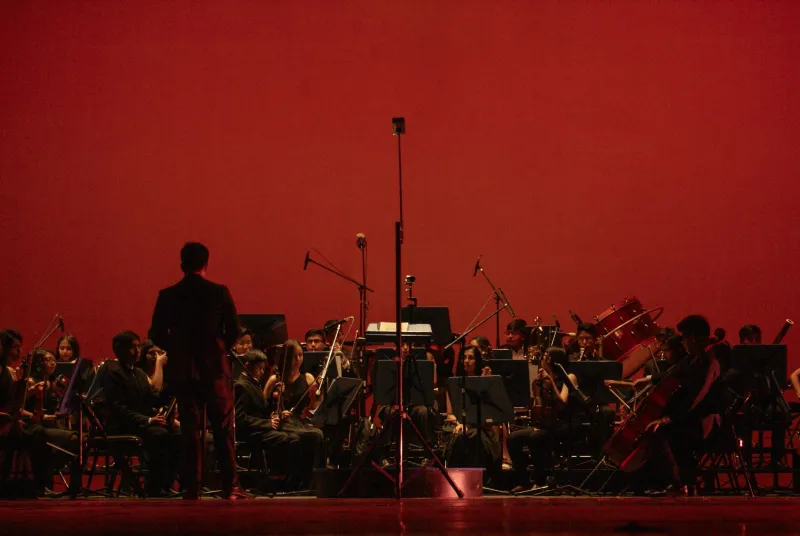
Fan-organized concert events like Anime Expo's musical showcases in Los Angeles draw massive crowds specifically to hear these scores performed live. Streaming platforms like Spotify and Apple Music have seen anime OST playlists rack up hundreds of millions of plays — numbers that would make any record label sit up straight. On social media, clips of anime scores playing over emotional scenes regularly go viral, introducing new listeners to composers they'd never encountered before.
The community is doing what award shows refuse to do: treating anime music as a legitimate art form worthy of genuine enthusiasm and critical attention. That's not nothing. In fact, it's probably the reason composers like Penkin and Sawano have global fanbases at all.
But fan love, as powerful as it is, doesn't carry the same cultural weight as a Grammy nomination. It doesn't get a composer a seat at the table when industry leaders are deciding what counts as significant musical achievement in a given year.
Something Has to Change
The Recording Academy added categories over the years to reflect evolving musical landscapes. Video game music has been slowly gaining ground in mainstream award conversations. There's no structural reason anime scoring can't follow a similar trajectory — except the will to make it happen.
Some hopeful signs are appearing. As anime continues its explosive growth in the US market — with series like Demon Slayer, Jujutsu Kaisen, and Frieren pulling in audiences who've never considered themselves anime fans — the composers behind those shows are getting more visibility by default. When a show becomes a genuine cultural moment, its music tends to follow.
But visibility isn't the same as recognition. And recognition isn't the same as respect.
Anime composers deserve all three. The fandom already knows it. Now it's time for the rest of the entertainment world to catch up — because these artists aren't waiting around. They're already onto their next masterpiece.