The Understudy Steals the Show: When Anime Spinoffs and Side Content Completely Outclass the Original

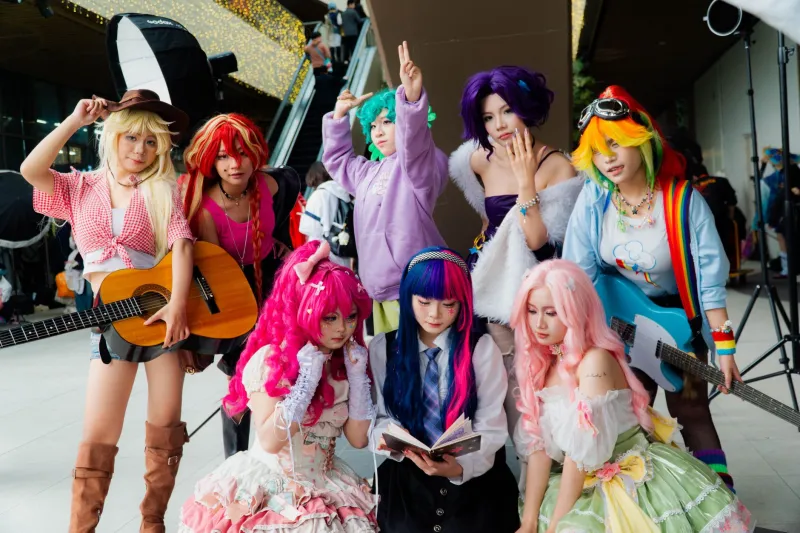
Photo: Weiye Li, CC BY-SA 4.0, via Wikimedia Commons
Every now and then, a piece of auxiliary content does something that no one expected — it becomes the thing people actually care about most.
Not the main series. Not the flagship adaptation with the massive budget and the prime-time slot. The spinoff. The side novel. The "bonus" story that got greenlit almost as an afterthought and ended up redefining what the entire franchise could be.
This happens more often than you'd think, and when it does, it reshapes fan communities in ways that studios rarely anticipate. The supplementary content stops being supplementary. It becomes the heart of the thing.
Why Spinoffs Get to Take More Risks
The secret advantage that spinoffs and side stories carry into existence is simple: nobody's expecting them to carry the whole franchise.
A main series adaptation arrives under enormous pressure. It has to honor the source material. It has to satisfy the existing fanbase. It has to function as an entry point for newcomers. It has to justify its budget. The weight of all those competing demands can make main series feel overly cautious — like they're trying not to break anything rather than trying to build something.
Spinoffs, by contrast, are often greenlit with looser expectations and smaller budgets. Nobody's betting the company on them. That freedom — even when it comes from being underestimated — creates breathing room for creative decisions that a main series would never risk.
A spinoff can focus entirely on a secondary character without worrying about shortchanging the protagonist. It can explore a niche corner of the world without needing to tie everything back to the central conflict. It can be weird, intimate, experimental, or slow in ways that a flagship adaptation simply can't afford to be.
The Character Focus Difference
Some of the best spinoff content succeeds specifically because it locks in on one character and refuses to look away.
Main series have to juggle ensemble casts. Screen time is political. Development gets distributed across multiple characters with varying degrees of success, and someone almost always gets shortchanged. Spinoffs don't have that problem. When a side story is built around a single perspective — a character who was compelling but underserved in the original — the creative team can go places the main series never could.
Think about what it means to spend an entire series inside the head of a character who previously only existed in relation to the protagonist. Suddenly you're not watching a supporting player — you're watching a full human being with their own wants, contradictions, and growth. That shift in framing can be revelatory, and fans respond to it intensely because they've already built a foundation of affection for the character. The spinoff gets to build the skyscraper on top of that foundation.
Franchises with rich ensemble casts are particularly vulnerable to this dynamic — or rather, particularly ripe for it. The more interesting supporting characters a main series has, the more potential exists for spinoff content to blow the doors off.
When the Side Novel Does What the Anime Couldn't
Light novel side stories and supplementary written content occupy a slightly different space than animated spinoffs, but they pull off the same trick with remarkable frequency.
Sometimes the main series adaptation gets constrained by runtime, budget, or the need to hit certain plot checkpoints on schedule. A companion novel doesn't have any of those constraints. It can linger. It can take a two-page scene from the main story and expand it into a chapter that finally gives you the character moment you'd been waiting for. It can explore timelines that the main adaptation skipped. It can give voice to characters whose inner lives were implied but never fully articulated on screen.
For fans who invest deeply in a franchise, this kind of supplementary content often becomes more emotionally significant than the main series — not because it's louder, but because it's more precise. It goes exactly where you wanted to go and stays there long enough to matter.
The challenge is access. Not all of this content gets translated, and even when it does, it requires a level of fan commitment that casual viewers won't make. Which means the audience for the best supplementary content is often a self-selected group of the most passionate fans — people who will absolutely evangelize for the side story that changed how they understood the whole franchise.
What Happens to the Main Series When the Spinoff Wins
This is where things get genuinely complicated for franchises.
When supplementary content outperforms the main series in quality and fan engagement, it creates a weird hierarchy inversion. The "primary" story is still nominally the most important thing — it's the one that gets the biggest marketing push, the most episodes, the highest-profile release. But in fan communities, the spinoff becomes the reference point. It's what people quote. It's what they recommend to friends. It's what they write essays about.
For studios, this is a mixed blessing. On one hand, having any piece of content in a franchise generate that level of enthusiasm is valuable. It keeps the IP alive and active in ways that benefit everything attached to it. On the other hand, it can make it harder to sell the main series as the definitive experience when fans keep pointing at the side story as the better one.
For fandoms, the inversion is usually just exciting. It validates the instinct that a particular character or corner of the world deserved more attention. It creates intense community conversations about what the franchise could have been. And it raises the bar for whatever comes next — because now everyone knows the franchise is capable of something that good.
The Bigger Takeaway for How We Consume Anime
The spinoff-beats-original phenomenon is ultimately a story about what happens when creative constraints get loosened and someone takes a genuine swing at something specific.
The best supplementary anime content isn't great despite being secondary — it's often great because of it. The reduced pressure, the narrower focus, the freedom to be something other than everything to everyone: these are advantages that main series rarely get to enjoy.
As American fandom grows more sophisticated and more willing to dig into the full ecosystem of a franchise rather than just the headline adaptation, the appetite for this kind of content is only going to increase. Fans are already hunting down side novels, seeking out spinoffs, and building communities around characters the main series treated as afterthoughts.
The understudy has been stealing the show for years. We're just getting better at noticing.