From Laughingstock to Legitimate: The Quiet Revolution Transforming Anime English Dubs
There was a time — not even that long ago — when saying you watched anime in English was basically a confession. Sub fans would roll their eyes. Forum threads would erupt. Someone would inevitably post a clip of an early 2000s dub with audio so wooden it could've been furniture. The joke practically wrote itself.
That era is over. And if you haven't noticed, you might want to catch up.
English dubbing for anime has undergone one of the most dramatic quality overhauls in the history of the medium, quietly but decisively shedding its reputation as the discount option. The shift didn't happen overnight, and it didn't come from one single breakthrough moment. It came from money, talent, creative ambition, and a generation of voice directors who refused to keep treating dubs like an afterthought.
The Budget Problem (And How It Got Fixed)
For years, the fundamental issue with English dubs wasn't laziness — it was economics. Localization budgets were tight, turnaround times were brutal, and studios treated the dub as a checkbox rather than a creative investment. Voice actors were often given minimal context, cramming performances into recording sessions that left little room for nuance or iteration.
That calculus started changing as streaming platforms entered the picture in a serious way. When Funimation, Crunchyroll, and Netflix began competing aggressively for anime licensing rights, they weren't just buying content — they were buying audience expectations. Streaming subscribers used to prestige TV weren't going to accept dub quality that felt like it belonged on a Saturday morning cartoon block from 2003.
The money followed the ambition. Production budgets for high-profile dubs expanded. Recording sessions got longer. Voice directors were given actual editorial input rather than just traffic-cop responsibilities. And crucially, the talent pool started attracting performers who'd previously focused on video games, animation, or even live-action work.
The Talent Migration Nobody Saw Coming
One of the most underreported stories in the dubbing renaissance is where the new voices are coming from. The traditional pipeline — regional voice acting hubs in Texas and Los Angeles feeding talent into localization studios — is still very much active, but it's been supplemented by a wave of performers bringing genuinely diverse training backgrounds.
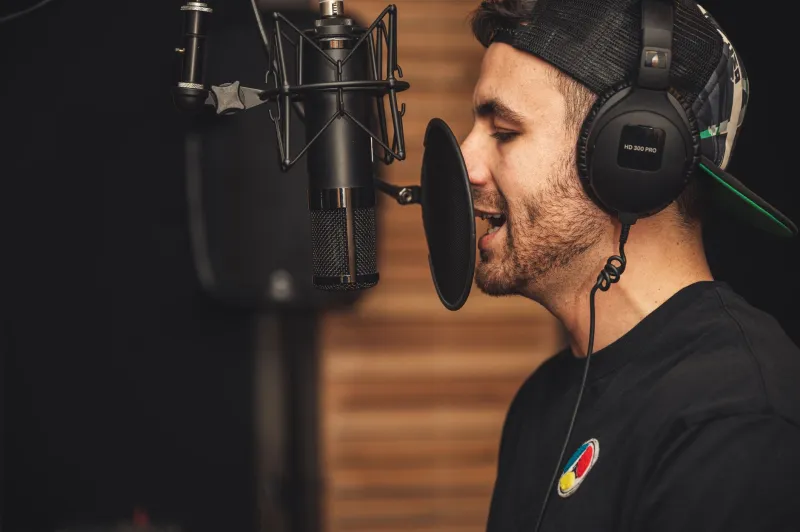
Voice directors across major localization studios have spoken openly in recent years about actively recruiting actors with classical theater training, improv backgrounds, and experience in emotionally demanding dramatic work. The result is performances that don't just match lip flaps — they inhabit characters.
Conrad Zimmerman, a voice director who's worked on several high-profile Crunchyroll dubs, noted in a 2023 industry panel that the biggest shift he's seen is actors coming in having already done deep homework on their characters. "They're watching the sub, they're reading the manga, they're asking questions about cultural context," he said. "That wasn't always the case. Now it's basically expected."
That preparation shows. Performances that once felt like competent recitation now carry genuine emotional weight — characters sound like they're living through their arcs, not narrating them.
Breakthrough Moments That Changed the Conversation
If you want to pinpoint specific performances that shifted how hardcore fans talked about dubs, a few names keep coming up.
Erica Mendez's work on Retsuko in Aggretsuko drew widespread praise for threading the needle between comedy and quiet devastation in ways that felt completely organic. Zach Aguilar's portrayal of Tanjiro in Demon Slayer won over a fanbase that had initially been skeptical, with his ability to project earnestness without tipping into saccharine territory.
But perhaps no single dub shifted the cultural conversation more than the English version of Vinland Saga. Nazeeh Tarrant's performance as Askeladd in particular drew comparisons — genuine, unironic comparisons — to prestige television acting. Critics who had never written seriously about anime dubbing suddenly found themselves reaching for vocabulary they usually reserved for peak HBO dramas.
That's a seismic shift. And it didn't go unnoticed by award bodies.
Awards, Recognition, and the Legitimacy Question
The industry's mainstream recognition of English voice acting quality has been building steadily. While Emmy nominations for voice performance in anime-adjacent categories remain a relatively new frontier, the trend line is unmistakable. Localization work is increasingly being submitted and considered alongside traditionally animated Western productions, a change that would've seemed absurd a decade ago.
The Annie Awards — long considered the gold standard for animation industry recognition — have seen more anime-adjacent submissions in recent cycles, with English dub performances being highlighted rather than buried. Industry guilds have updated their frameworks to more formally include anime localization work, giving performers clearer pathways to recognition that simply didn't exist before.
For the voice actors themselves, this matters enormously. Many have spoken about the frustration of doing their best work on projects that were never taken seriously by award bodies or industry press. The validation isn't just symbolic — it attracts more serious talent, which raises the quality floor, which attracts more recognition. The flywheel is spinning.
What Die-Hard Sub Fans Are Actually Saying Now
Here's the thing about the dub vs. sub debate in 2024: it's gotten genuinely complicated, and that's a good sign.
The most devoted subtitle purists — the ones who used to treat watching a dub as a moral failing — have largely shifted from blanket dismissal to selective appreciation. The argument has evolved from "dubs are always worse" to "dubs vary wildly in quality and some are legitimately great." That's a massive concession, even if it's often delivered with the energy of someone admitting they kind of liked a movie they expected to hate.
Community forums and social media have reflected this shift. Threads that once devolved instantly into sub vs. dub flame wars now frequently feature sub fans recommending specific dubs as worth trying. That would have been unthinkable in the mid-2010s.
Where It Goes From Here
The dubbing renaissance isn't finished — it's arguably still in its early chapters. Simultaneous dub releases, which were once considered logistically impossible for most productions, are becoming increasingly standard for high-profile titles. That means fans don't have to choose between watching something the moment it drops or waiting months for an English version.
AI localization tools are entering the conversation too, and the industry is navigating that tension carefully. Voice actors and directors have been vocal about the risks of cutting corners with automation at exactly the moment when quality has become the genuine selling point. The creative community is pushing back, and the outcome of that fight will shape what dubs look like five years from now.
But right now, in this moment? English dubbing is having its best era. The punchline has become the pitch. And honestly, it's been a long time coming.
If you've been sleeping on dubs because of how they used to be, it might be worth giving the current generation a real shot. You might be surprised what you've been missing.